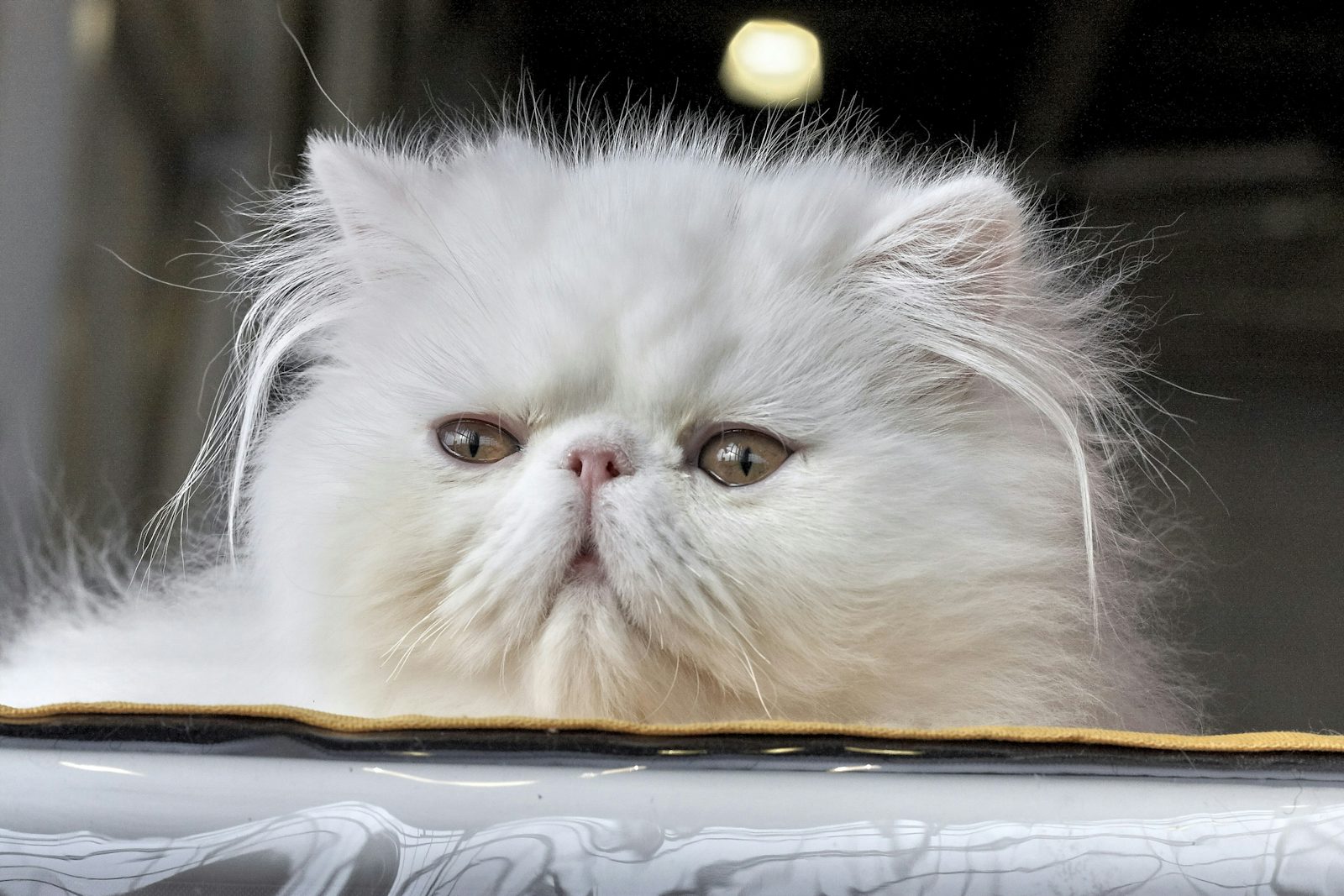
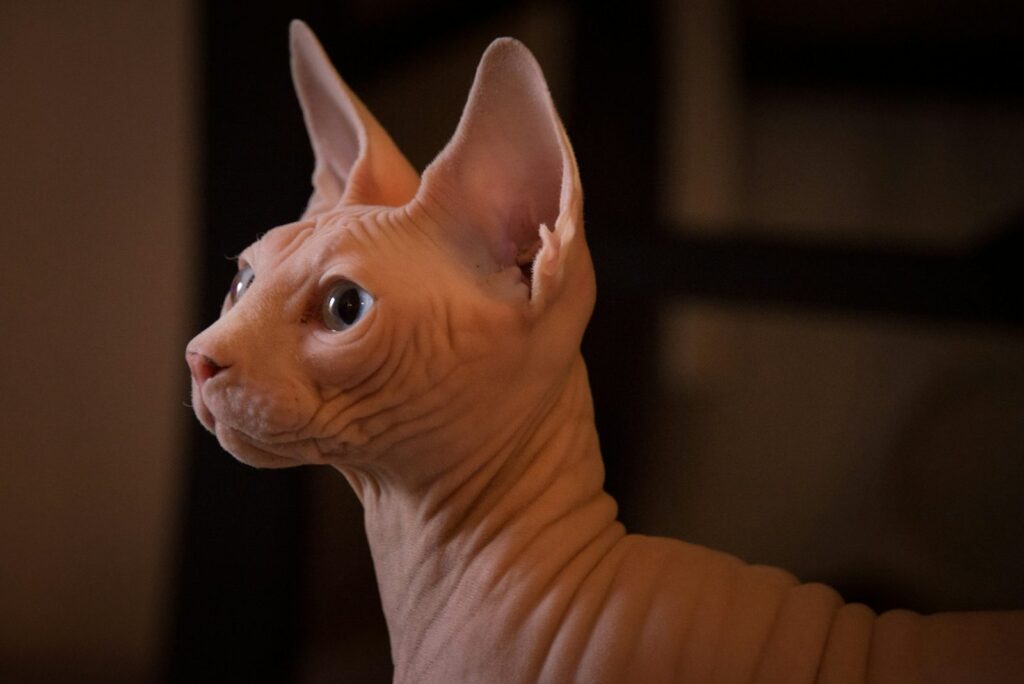
If you share your home with a Persian or a Sphynx, you already know they’re not “just cats” when it comes to health. Both breeds carry well-documented, breed-specific risks that can turn into five-figure vet bills — and that reality changes how you should shop for a policy. This guide walks through what purebred cat insurance actually needs to cover, what Persian and Sphynx owners specifically should watch for, and how pricing tends to differ from a mixed-breed shorthair.
The essentials in 30 seconds
Persians are predisposed to polycystic kidney disease (PKD) and a cluster of problems linked to their flat-faced (brachycephalic) skull shape — breathing, eye, and dental issues among them. Sphynx cats carry an elevated risk of hypertrophic cardiomyopathy (HCM), a serious heart condition, along with skin and temperature-regulation challenges tied to having no coat. The single most important move for either breed is enrolling in a policy while the cat is young and symptom-free, since any condition that shows symptoms before enrollment — even if never formally diagnosed — is typically excluded as pre-existing. Premiums for purebreds can run somewhat higher than for a mixed-breed cat, though the gap varies a lot by insurer, location, and the plan you choose.
Why breed matters more for Persians and Sphynx than for most cats
Pet insurers underwrite risk the same way any insurer does: by looking at what’s statistically likely to go wrong. For a domestic shorthair, that risk profile is relatively low and well spread out. For breeds with known hereditary conditions, it’s concentrated and, in some cases, close to inevitable over a long enough lifespan.
Persian cats: kidneys and skull shape
Polycystic kidney disease is widely considered the most common inherited disease in cats, and Persians carry the highest burden of it. It’s an autosomal dominant condition — a cat only needs one copy of the gene to eventually develop cysts on the kidneys — and studies cited by the UC Davis Veterinary Genetics Laboratory have found PKD prevalence around 38% in Persians in the United States. A DNA test (the PKD1 test) can identify carriers, though insurance typically won’t cover the cost of the test itself — only the treatment of the disease if it develops after the policy is in force.
Separately, a large UK study published in Scientific Reports (O’Neill et al., 2019) found that nearly 65% of Persians examined in general veterinary practice had at least one diagnosed disorder, most commonly involving the coat, teeth, or eyes. Much of this traces back to the breed’s flat facial structure, which is associated with breathing difficulty, chronic eye irritation, dental crowding, and — in female cats — a higher risk of difficult births (dystocia) due to the mismatch between kitten head size and the mother’s pelvis.
Sphynx cats: the heart and the skin
Hypertrophic cardiomyopathy is the condition Sphynx owners should know best. It’s a thickening of the heart muscle that can lead to heart failure, blood clots, or sudden death, and it tends to show up relatively early — often between two and three years old. A 2024 study published in Animals and indexed on PubMed found HCM in 40% of the Sphynx cats examined (20 of 55), and linked the condition to a variant in the ALMS1 gene, though the researchers noted the genetic variant alone didn’t reliably predict which cats would develop the disease. Both the Cornell Feline Health Center and NC State’s veterinary hospital list Sphynx as a high-risk breed for HCM and recommend periodic cardiac screening.
Beyond the heart, the Sphynx’s lack of fur creates its own set of costs: oily skin buildup that can lead to seborrhea, a higher susceptibility to sunburn, and real difficulty regulating body temperature (most Sphynx owners keep their homes closer to 68–77°F for this reason). These aren’t typically catastrophic expenses on their own, but they add up in recurring vet visits and specialty skin products.
What to look for when choosing coverage
Purebred-specific shopping comes down to a handful of questions that matter more here than for an average mixed-breed cat.
- Does the insurer cover hereditary and congenital conditions? Most major providers do, as long as the condition hasn’t shown symptoms before the policy’s effective date. Confirm this explicitly rather than assuming it — it’s the single biggest factor for a Persian or Sphynx policy.
- How is “pre-existing” defined? Some insurers only exclude conditions that were formally diagnosed before enrollment; others exclude anything that showed symptoms at all, diagnosed or not. This distinction matters enormously for a slow-developing condition like PKD.
- Is there a waiting period for specific conditions? Heart conditions like HCM sometimes carry a longer waiting period than accidents. Our guide to pet insurance waiting periods breaks down how these work and how to avoid coverage gaps.
- What’s the annual limit and reimbursement rate? A Sphynx diagnosed with HCM can face ongoing cardiology visits, echocardiograms, and medication for years. A capped annual limit that seemed generous for routine care can be exhausted quickly by a chronic condition. See how reimbursement percentages affect your actual out-of-pocket costs.
- Enrollment age windows. Some insurers cap the age at which you can first enroll a pet — commonly cited windows run from a few months old up to around three years for standard plans. Enrolling a Persian kitten or a young Sphynx as early as possible locks in coverage before any breed-typical condition has a chance to surface.
How insurers actually treat purebred cats
Coverage philosophy varies by company, and purebred owners shouldn’t assume every insurer treats breed risk the same way. Trupanion, for example, factors breed into pricing specifically for purebreds with documented heritable disease patterns — the company has cited flat-faced Persians’ breathing issues as one example — while a mixed-breed domestic shorthair is generally treated as the lower-risk baseline. ASPCA Pet Health Insurance explicitly lists Persians among the purebreds it covers, with standard enrollment windows typically running from around three months to three years of age.
The broader industry pattern, seen across most reputable insurers, is straightforward: a hereditary or congenital condition like PKD or HCM is covered like any other illness if the cat was enrolled before showing symptoms. If symptoms existed first — whether or not a vet ever formally diagnosed them — the condition is generally treated as pre-existing and excluded. A few insurers also set stricter enrollment age limits for breeds carrying well-known genetic risk. This is exactly why timing your enrollment matters more for a Persian or Sphynx than it does for a cat with no strong breed predisposition — see our broader look at how pre-existing conditions are handled for the mechanics.
What purebred cat insurance tends to cost
Precise, verified premium figures specific to Persian and Sphynx cats are harder to pin down than general market averages — most of what’s publicly available comes from comparison sites rather than insurers’ own published rate tables, so treat any single number as a rough guide rather than a quote. That said, aggregator estimates for Persian cats commonly fall somewhere in the $30–86 per month range, depending heavily on the insurer, your location, the deductible and reimbursement level you choose, and your cat’s exact age. For Sphynx cats, reliable published premium data is genuinely thin; getting an accurate number really does require requesting quotes directly from a few insurers rather than relying on a general estimate.
For context, a mixed-breed domestic shorthair tends to run cheaper: ASPCA Pet Health Insurance has cited roughly $34 per month for its mid-tier Complete plan (a $10,000 annual limit, $250 deductible, 80% reimbursement), and Forbes Advisor has put the broader market average for mixed-breed cats around $25 per month. Our breakdown of pet insurance cost by breed covers how these numbers shift across species and breed more generally, and if cost is your main concern, it’s worth reading how cat premiums stack up against dog premiums in our dog vs. cat insurance cost comparison.
When purebred-specific coverage might not be worth it
If your Persian or Sphynx is already several years old and has a documented history of PKD, HCM, or another breed-typical condition, a new policy generally won’t cover that specific condition — it will already be pre-existing by the time you apply. In that situation, insurance can still make sense for future, unrelated accidents and illnesses, but it won’t solve the cost problem you’re facing right now. Setting aside a dedicated vet fund, alongside or instead of a policy, may be the more realistic option — our piece on pet insurance for indoor cats touches on when self-insuring can be the better call for lower-risk situations, and the same logic applies here if your cat’s condition is already established.
Frequently asked questions
Does pet insurance cover PKD in Persian cats?
Generally yes, if your Persian was enrolled before showing any symptoms of kidney disease. Once symptoms appear or a diagnosis is made, PKD becomes a pre-existing condition and future treatment for it typically won’t be covered by a new or existing policy.
Is a PKD or HCM genetic test covered by insurance?
The DNA test itself usually isn’t covered — insurers pay for diagnosis and treatment of an actual medical condition, not preventive genetic screening. However, a clear test result doesn’t appear to lower your premium either, based on currently available information; its main value is helping you and your vet monitor proactively.
Should I insure a Sphynx kitten even if it looks healthy?
Yes — this is generally the strongest argument for insuring a Sphynx early. HCM often doesn’t show clinical symptoms until a cat is two or three years old, so enrolling while the kitten is young and asymptomatic is what keeps the condition eligible for coverage later.
Are Persian and Sphynx cats more expensive to insure than a regular cat?
Often somewhat, yes, though the exact difference varies widely by insurer and location. Because published data specific to these breeds is limited, the most reliable way to know your real cost is to request quotes directly from a few insurers for your specific cat.
What’s the biggest mistake purebred cat owners make with insurance?
Waiting too long to enroll. Because conditions like PKD and HCM develop gradually and can exist before showing obvious symptoms, delaying enrollment by even a year or two can mean the condition is already excluded by the time you apply.
The bottom line
Persian and Sphynx cats come with real, well-studied health risks that make insurance timing especially important — enroll early, read the pre-existing condition language carefully, and confirm hereditary conditions are covered before you commit to a plan. Pawprotectplans.com is an independent educational resource, not an insurance company, so we don’t sell policies directly — but comparing options is the next logical step. Our roundup of the best cat insurance plans for 2026 is a good place to start narrowing down providers that fit a purebred cat’s needs.
No responses yet